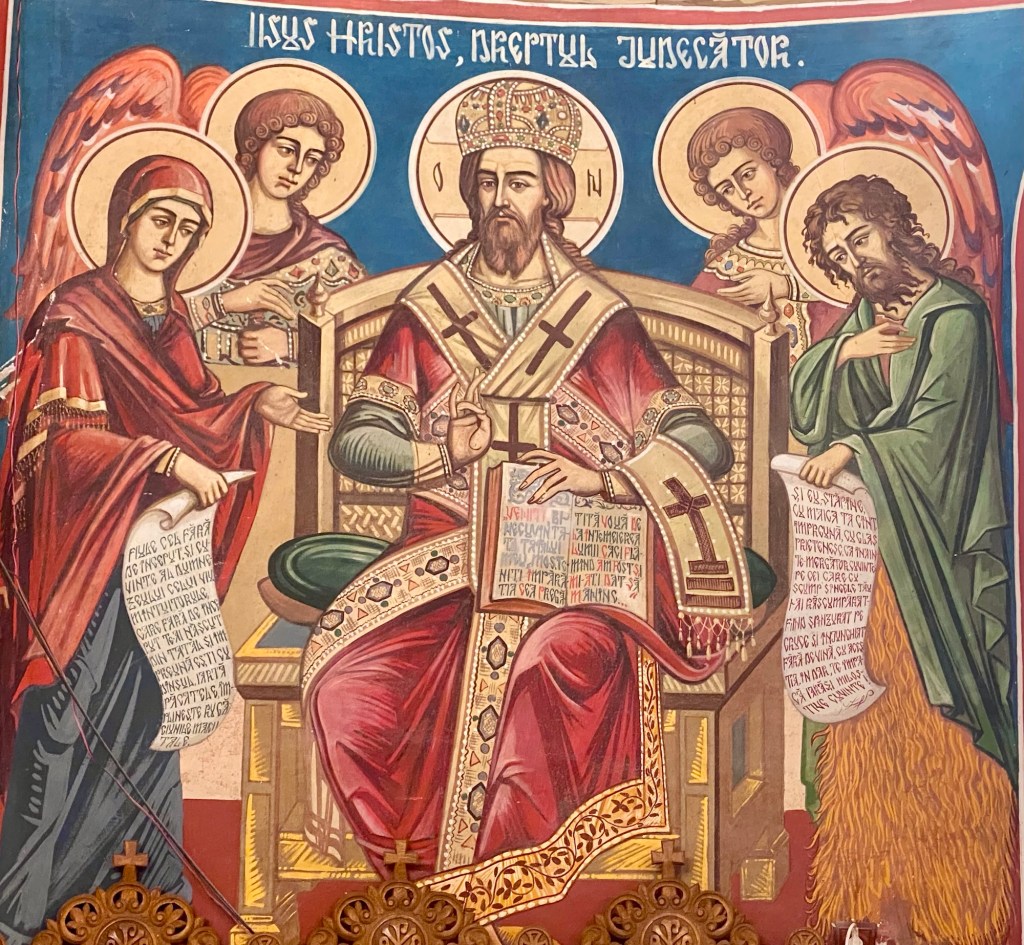
The mystery of man is deeper than any science; psychology and neurology, no matter how wise they may appear in the eyes of the world, cannot penetrate the depths of the human being, for they study only what is seen, what is measurable, what belongs to the body and the mind. But man is not only flesh and blood, not merely a network of neurons and chemical reactions — man is a “living soul” (Genesis 2:7), the breath of life from God, the image of the Invisible One.
The mind of man, say the Holy Fathers, is not only reason but also the “eye of the soul,” the organ through which man can behold God. How could science, which stops at the boundary of the body, enter this spiritual realm? How could a microscope see the tear of repentance or the prayer of the heart?
Saint Gregory Palamas teaches that “man is a small world,” a cosmos in himself where the visible and the invisible meet. And Saint Isaac the Syrian says, “He who has seen himself has seen all things.” Thus, the mystery of man cannot be grasped by worldly methods; it is revealed only in the light of grace, in prayer, in fasting, in silence, and in tears.
Psychology can describe disturbance, but it cannot give peace. Neurology can measure brain impulses, but it cannot understand the soul’s longing for God. Only the grace of the Holy Spirit can heal the depths of the being, where no scalpel can reach.
Therefore, my brother, do not put your trust in science without God, but seek to know yourself in the light of the Gospel, for only in Christ does man discover himself whole: body, soul, and spirit, called to deification. “Know yourself, and you will know all the mysteries of creation and of the Creator.” This is what the Fathers taught us — and this knowledge does not come from laboratories, but from the cell, from prostrations, from the silence of the heart.
May God enlighten your mind and warm your heart with the fire of His love.
Psychology and Neurology Cannot Fully Contain the Human Being
Beloved child of the Church, many people today seek to penetrate the mystery of man through the means of psychology and neurology. These sciences are useful in their measure, for they study the order of the bodily nature and the movements of the emotional soul, but they cannot pass beyond the boundary of matter.
Man is not only body, nor only psyche, but a “living soul.” The Fathers said clearly:
“Man is a small world, yet he contains within himself the great one.”
And again: “The soul is the breath from God, the image of the One without image.”
Psychology can describe behaviors, reactions, traumas, mechanisms. Neurology can trace impulses, synapses, brain circuits. But neither can reach the place where God meets man — the depth of the heart, spiritual freedom, the conscience as the organ of divine presence, the grace that transfigures, the mystery of the person, which cannot be reduced to biological functions.
“The heart of man is deep” (Psalm 63:7).
The Fathers of the desert knew this truth not through theories but through ascetic struggle:
in the desert of Nitria, where silence revealed the movements of the soul;
in the desert of the Cells, where man saw himself in the light of God;
in Scetis, where grace showed that man is more than psychic and bodily.
There the elders understood that man cannot be explained — only lived in relationship with God.
Sciences can help, but they cannot define man. They are good in their measure, but they remain on the surface. They cannot measure repentance, prayer, inner freedom, grace, sacrificial love, the illumination of the mind — for these are not psychic phenomena but energies of the living soul, which comes from God and returns to Him.
The Mystery of Man Is the Mystery of God in Man
Saint Gregory of Nyssa says:
“He who has seen man has seen the depth of God.”
Therefore, any science that does not acknowledge the spiritual dimension of the person remains incomplete. Man is not merely an organism, not merely a set of psychological reactions, not merely a brain processing information. Man is a person, the image of God, called to deification.
 Pustia Inimii